
If you’re remodeling a bathroom in the Sacramento area and considering heated floors, you’ve probably already gone down a rabbit hole of brand names, wattage specs, and thermostat options. Here’s the thing: most of what you’ll read online is written by retailers selling you a product, not contractors who’ve actually installed these systems in real homes.
We’ve installed electric radiant floor heating in dozens of bathrooms across Carmichael, Granite Bay, Folsom, and El Dorado Hills. Schluter DITRA-HEAT is our system of choice — and we’ll tell you exactly why, along with where it falls short and when a different system might make more sense.
Best Electric Floor Heating Systems at a Glance
| System | Best For | Approx. Cost/sq ft (materials) | Works Under Tile? | Uncoupling Built In? | Our Verdict |
|---|---|---|---|---|---|
| Schluter DITRA-HEAT | Tile bathroom remodels | $4–$6 | Yes | ✅ Yes | Best overall for tile |
| WarmUp DCM-PRO | Larger square footage | $3–$5 | Yes | ❌ No | Good for bigger rooms |
| nuheat FLOOR | DIY-friendly projects | $4–$6 | Yes | ❌ No | Easiest to self-install |
| Laticrete HeatWave | Budget installs | $2–$4 | Yes | ❌ No | Best budget option |
| Warmboard | New construction / hydronic | $12–$20 | Yes | N/A | Overkill for most baths |
Why We Use Schluter DITRA-HEAT
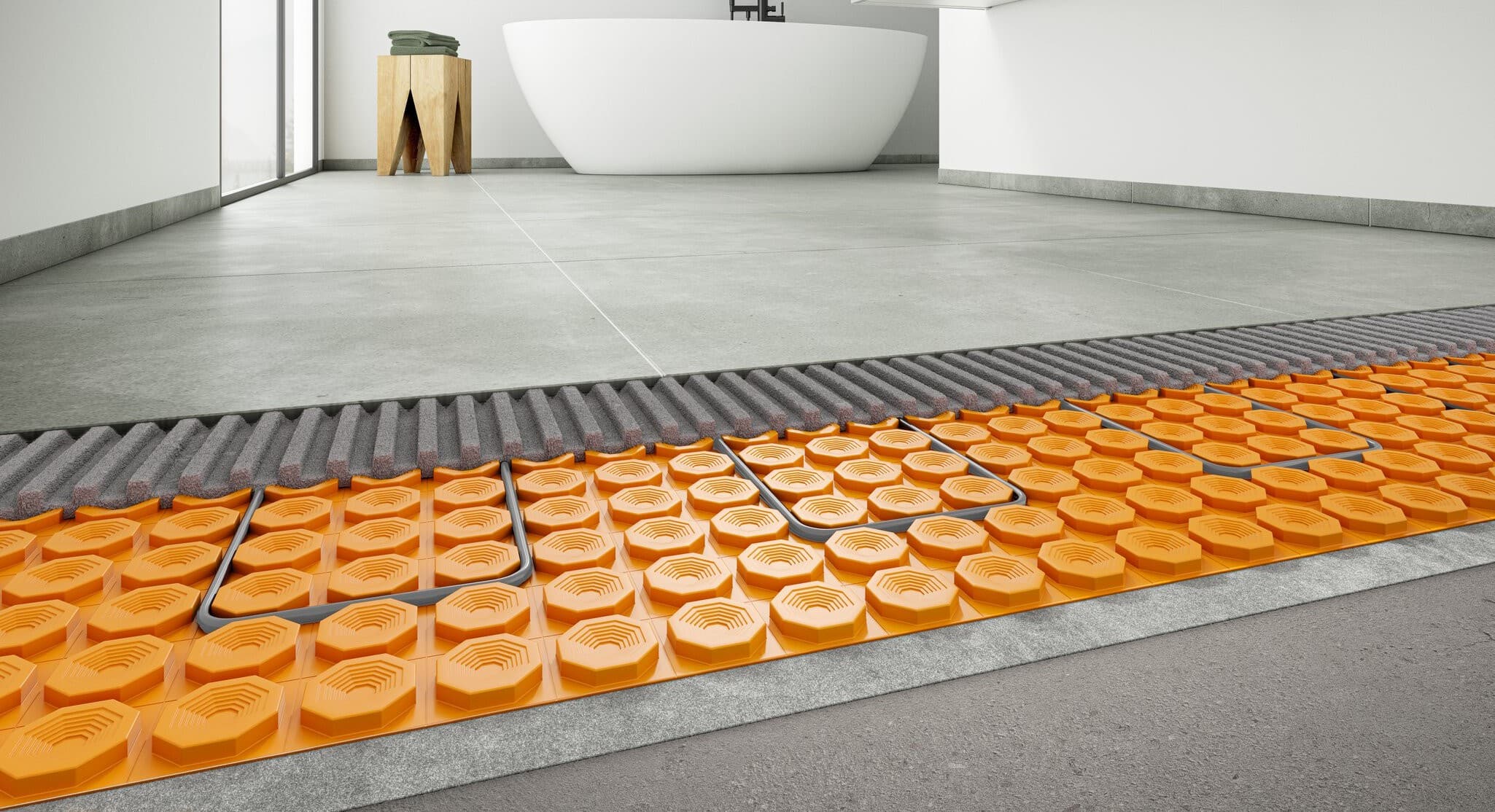
Electric radiant floor heating works by embedding heating cables beneath your tile. The cables warm the tile surface, which then radiates heat upward — so instead of convection heat blowing from a vent, you get gentle, even warmth underfoot.
The reason we choose DITRA-HEAT over competing systems comes down to one thing: it combines two systems into one layer.
Every tile installation over a wood or concrete subfloor needs an uncoupling membrane — a layer that absorbs the natural movement between your subfloor and tile, preventing cracked grout and loose tiles over time. Normally, you’d install an uncoupling membrane AND a separate floor heating system, which adds thickness, installation time, and cost.
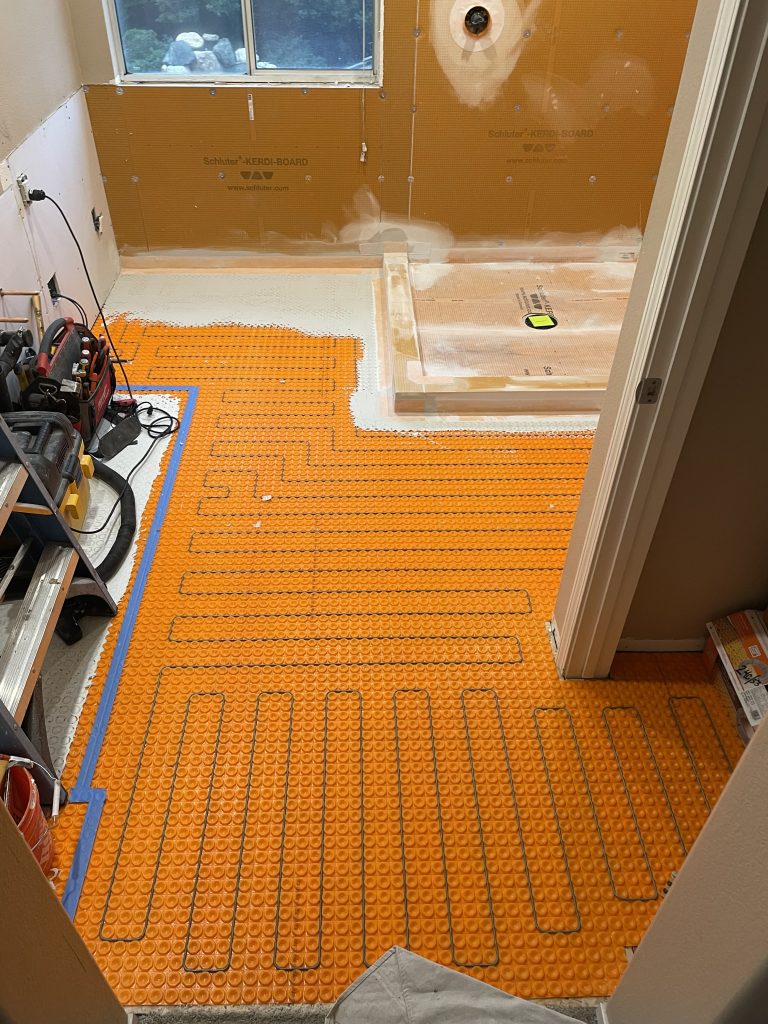
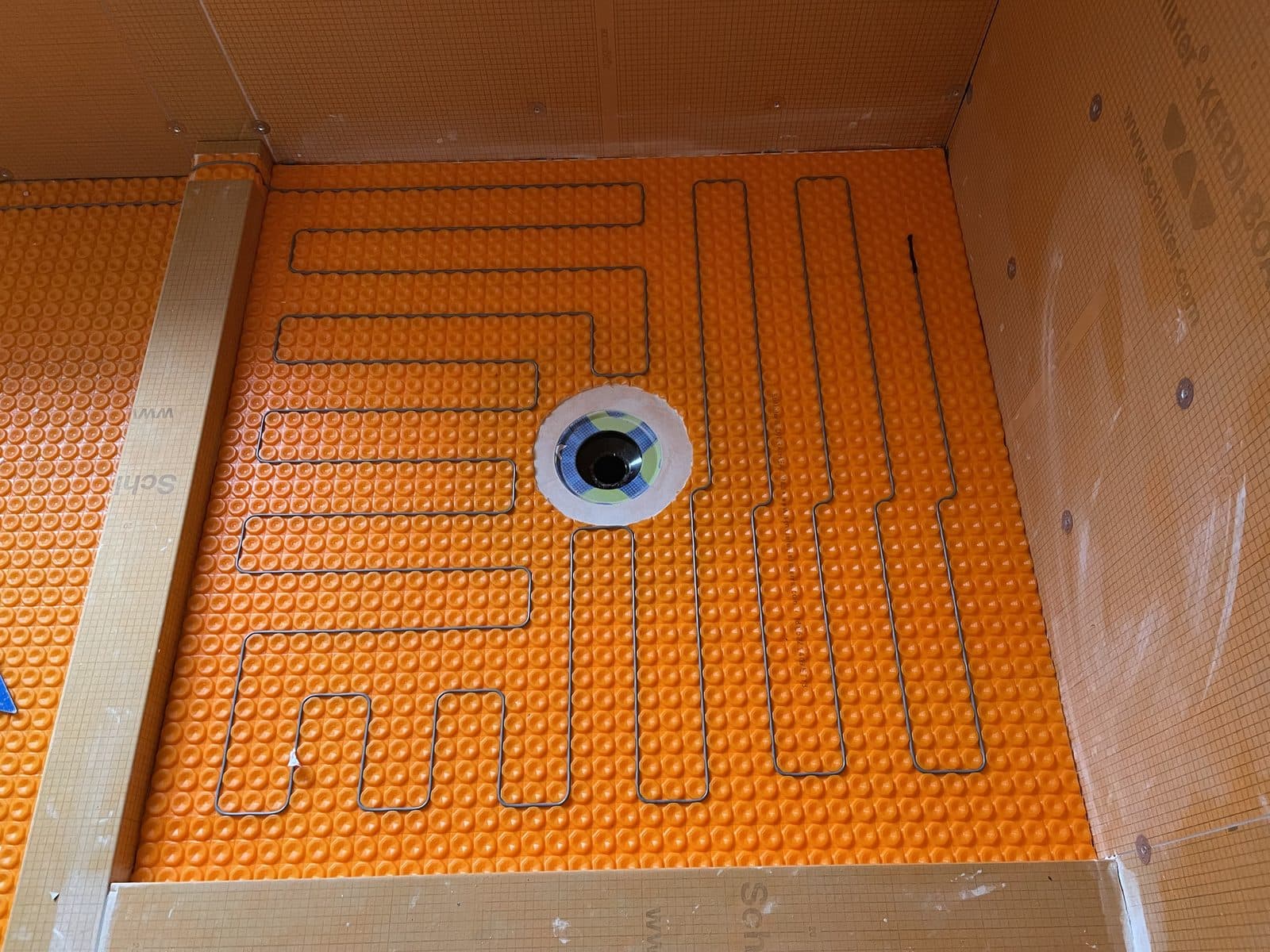
DITRA-HEAT bakes the uncoupling membrane and the heating cable system into a single product. The cables snap into a polyethylene mat — no leveling compound needed, no extra layer, tile installation can begin immediately. For a bathroom remodel where we’re already installing DITRA as part of the tile assembly, adding the heated floor cables is a natural extension of the same scope.
The practical result: a bathroom floor that won’t crack, grout that won’t fail, and a heated floor that performs reliably for 20+ years.
What Heated Floors Actually Cost in Sacramento
Homeowners frequently underestimate heated floor costs because they’re only looking at the material price. Here’s a realistic breakdown for a 60 sq ft bathroom (typical Sacramento master bath):
| Item | Estimate |
|---|---|
| DITRA-HEAT membrane (60 sq ft) | $150–$200 |
| Heating cable (60 sq ft coverage) | $180–$280 |
| Thermostat (programmable Wi-Fi) | $150–$200 |
| Electrical rough-in (dedicated circuit) | $250–$500 |
| Labor (membrane + cable installation) | $400–$600 |
| Total installed | $1,100–$1,800 |
A few things that affect the number:
- Existing electrical panel capacity — a dedicated 20-amp circuit is required; if your panel is near capacity, costs go up
- Subfloor condition — any leveling or repair work before membrane installation adds cost
- Room size — larger rooms see better per-sq-ft economics on materials, but labor scales too
When done as part of a full bathroom remodel, heated floors typically add $1,200–$2,000 to the overall project cost. As a standalone addition to an existing bathroom, expect the higher end of that range due to mobilization.
Is a Heated Bathroom Floor Worth It?
Short answer: yes, for most Sacramento homeowners — though not for the reason most people assume.
Sacramento winters are mild compared to most of the country, so heated floors aren’t a heating necessity the way they are in Minnesota. The value here is comfort and home value, not utility savings.
Where the ROI is strongest:
- Master bathrooms — the room where you start and end your day; comfort impact is highest
- Tile floors specifically — tile conducts cold far more than hardwood or carpet; the improvement is dramatic
- Homes being prepared for sale — heated floors in a master bath are a genuine differentiator in Sacramento’s remodeling market
- Aging-in-place remodels — warm floors reduce thermal shock, particularly important for older homeowners
Where it makes less sense:
- Small guest bathrooms you rarely use
- Rooms with carpet or luxury vinyl plank (heated floors work better under tile and stone)
- Homes on a very tight remodeling budget where the money is better spent on layout or fixtures
How to Add Heated Floors to Your Remodel
Heated floors need to be part of the conversation early in your project — not an afterthought. Here’s why:
- Electrical planning happens at rough-in — the dedicated circuit needs to be run before walls close up
- Floor height coordination — DITRA-HEAT adds about ¼” to your floor assembly; this needs to be accounted for in transitions to adjacent rooms
- Thermostat location — the thermostat goes on the wall at standard outlet height; its position should be decided before tile work begins

If you’re planning a bathroom remodel in the Sacramento area and want heated floors as part of the scope, the conversation starts with an estimate. We’ll assess your subfloor, existing electrical, and room layout to give you a realistic picture of what it adds to your project.
Wondering if heated floors make sense for your remodel?
We install electric radiant heat across the Sacramento area — as part of a bathroom remodel or on its own. See what's involved, what it costs, and whether your floors qualify: Heated floor installation, explained.
Want your own number first? Run our heated floor cost calculator — it prices the install and the monthly running cost against your actual utility, and it takes about thirty seconds.
Frequently Asked Questions
Can heated floors be added to an existing bathroom without tearing up the tile?
No — the heating cables install beneath the tile, so the floor needs to come up first. This is why heated floors are best added during a full bathroom remodel when tile is already being replaced.
How much does it cost to run a heated bathroom floor?
A 60 sq ft bathroom running the DITRA-HEAT system costs approximately $0.10–$0.20 per hour of operation. With a programmable thermostat set to run only during morning hours, most homeowners see an increase of $5–$15/month on their electricity bill.
Does heated floor installation require a permit in Sacramento?
The electrical work (dedicated circuit and thermostat installation) requires a permit and must be performed by a licensed electrician. The membrane and cable installation itself typically does not require a separate permit. We coordinate both as part of our full-service remodel scope.
How long does DITRA-HEAT installation take?
The membrane and cable installation is typically a half-day to full-day scope within a bathroom remodel. Curing time before tile installation follows standard thin-set mortar requirements — usually 24 hours.